Top 5 Tips for Choosing the Right Pipette Tips?
Choosing the right pipette tips is crucial for laboratory accuracy. With precision playing a vital role, studies indicate that 60% of laboratory errors stem from improper pipetting techniques. Selecting suitable pipette tips can significantly enhance reproducibility in experiments.
Pipette tips come in various sizes and materials. Understanding these options is essential for effective application. Research shows that the choice of tips affects liquid retention and contamination risk. This data highlights the importance of quality and compatibility in pipette tips. Minor mistakes in selection may lead to substantial errors in results.
Furthermore, inconsistent quality among pipette tips can cause frustration. Researchers often overlook the subtle differences in specifications. Making informed choices can prevent inefficiencies and save time. It’s easy to become overwhelmed with choices available in the market. Thus, having a clear understanding of the key factors in selecting pipette tips is necessary for any laboratory professional.

Understanding Different Types of Pipette Tips: A Comprehensive Overview
Choosing the right pipette tips is crucial for accurate lab work. Different types of pipette tips cater to various applications. For instance, standard tips are best for general use, while filter tips prevent contamination. There are also low retention tips that minimize sample loss. Each type has its unique features that can impact your results.
When selecting pipette tips, consider the compatibility with your specific pipette model. Mismatched sizes can lead to inaccurate measurements. It’s important to test different brands to determine which tips work best for your needs. Some researchers find that certain brands are more reliable in achieving reproducible results, while others may experience variability.
Quality matters. Low-quality tips can affect your experiment's outcome. They may break or not fit the pipette properly. A thoughtful approach is required to ensure your chosen tips align with your experiment's precision. Reflecting on your experiences with various tips can lead to better choices in future experiments. Be open to making changes based on what you observe in your results.
Top 5 Tips for Choosing the Right Pipette Tips
This chart illustrates the top factors to consider when choosing the right pipette tips, rated on a scale from 1 to 10 based on their importance. Material quality and volume range are crucial for accurate results, while filtration and compatibility also play significant roles in performance.
Evaluating Material Compatibility: Plastic vs. Glass Pipette Tips
When selecting pipette tips, material compatibility is crucial. Many researchers use plastic or glass tips. Each material has unique traits affecting performance and results.
Plastic pipette tips are common due to their versatility. They are lightweight and resistant to breakage, making them suitable for everyday lab work. Plastic tips often come in various sizes and volumes. However, they may absorb certain substances, which could lead to contamination. Ethanol, for example, can alter the integrity of some plastics.
Glass pipette tips, while less common, offer distinct advantages. They are chemically inert and do not absorb liquids. This makes them ideal for precision applications. However, glass tips are fragile and can break easily. Researchers should consider the type of liquids being transferred before making a choice.
Tip selection can significantly impact your experiments. Think about your specific needs. Do you need precision? Or are you focusing on cost-effectiveness? Make sure to assess what fits best for your own practices. This decision can minimize errors and enhance reliability in your results.
Assessing Volume Range: Choosing the Right Capacity for Your Experiments
Choosing the right pipette tips begins with understanding volume range. Every experiment has specific needs, often defined by the liquids being used. When working with small sample sizes, precision is key. If the pipette tips are not chosen properly, you risk inaccurate results. For instance, using a tip designed for larger volumes may lead to excess air exposure.
Consider the pipetting volume when selecting tips. For micro-scale operations, a lower capacity tip is essential. This ensures that you can accurately measure and transfer the smallest volumes. High-capacity tips may not provide the necessary precision, leading to errors. Also, consider the liquid's viscosity. Thicker liquids may require special tips, as they can clog standard ones.
Reflect on past experiments as you make your choice. Did you face issues with your previous pipetting? Were there inconsistencies? These considerations can guide your decision-making process. Investigating different options can improve your lab work. In the end, it’s about achieving reliable results that you can trust for further applications.
Importance of Filter Options: Preventing Contamination in Pipetting
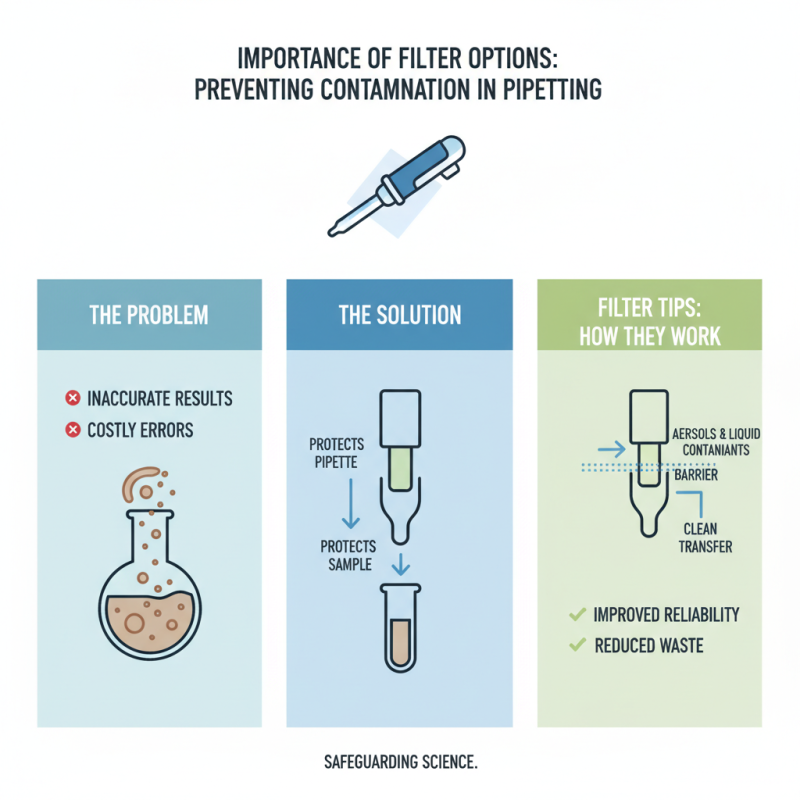
In the world of laboratory practices, preventing contamination is crucial. Contaminated pipetting can lead to inaccurate results and costly errors. Filter tips serve as a vital tool in this regard. They act as barriers against aerosols and liquid contaminants, safeguarding both samples and pipettes.
Research shows that using filter options can reduce cross-contamination by up to 99%. This data emphasizes the importance of integrating filter tips into pipetting processes, especially when working with sensitive samples. For instance, DNA or RNA samples are particularly vulnerable to degradation. A single aerosol droplet can easily compromise the integrity of such samples.
However, not all filter tips are created equal. It is essential to assess the pore size and material of the filters. Choosing the wrong specifications may lead to suboptimal protection. Pipette tips with improper filters can still allow contaminants to pass through. Therefore, investing time in proper selection is not just beneficial—it's necessary. In the quest for precision in pipetting, overlooking the filter options can have significant repercussions.
Cost-Effectiveness vs. Quality: Balancing Budget and Performance in Tips
Choosing the right pipette tips involves more than just price.
Cost-effectiveness is vital, but quality cannot be sacrificed. When you’re in a lab, every drop counts,
and inaccuracies can lead to big issues. Cheap tips may save money upfront, but they can skew results.
Think of experiments that need precision. Low-quality tips can change how liquids are dispensed.
Balancing budget and performance requires careful thought. Consider the materials used in pipette tips.
Some materials might seem affordable, yet they compromise reliability over time. Investing in better quality
tips can enhance reproducibility. It’s crucial to evaluate your lab's specific needs. Different applications
might demand varying levels of precision. This can affect your overall expenses.
Many users find themselves overlooking quality when pursuing a bargain. Reflect on past experiences where
choosing cheaply led to frustration. Compromising cannot only impact your data,
but also your overall efficiency. Choose wisely, and weigh your options carefully.
Ultimately, the right tips can save time and resources in the long run.
Make informed selections to ensure the integrity of your lab work.