What is a Pipette Tip and Its Importance in Laboratory Applications?
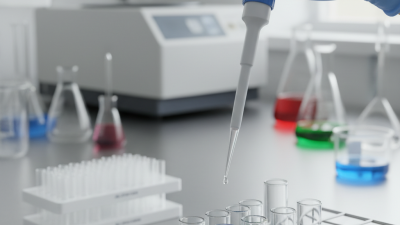
In laboratory environments, precision is essential for successful experiments. Pipette tips play a crucial role in achieving this accuracy. These small, disposable attachments allow scientists to transfer liquid with minimal contamination risk. The right pipette tips can significantly affect the outcome of sensitive experiments.
Choosing the appropriate pipette tips depends on various factors. The volume of liquid being measured, the type of pipette used, and the nature of the sample must all be considered. Incorrect choices can lead to errors that compromise experimental results, prompting researchers to reevaluate their techniques. For instance, using tips that are not compatible with the pipette can cause inconsistencies in liquid handling.
Understanding the importance of pipette tips can help enhance laboratory practices. Reliable tips ensure reproducibility and accuracy in results. However, researchers must remain mindful of the limitations of these tools. Not all pipette tips are created equal; variations in manufacturing can impact performance. Therefore, careful selection and testing are necessary to maintain high standards in scientific research.
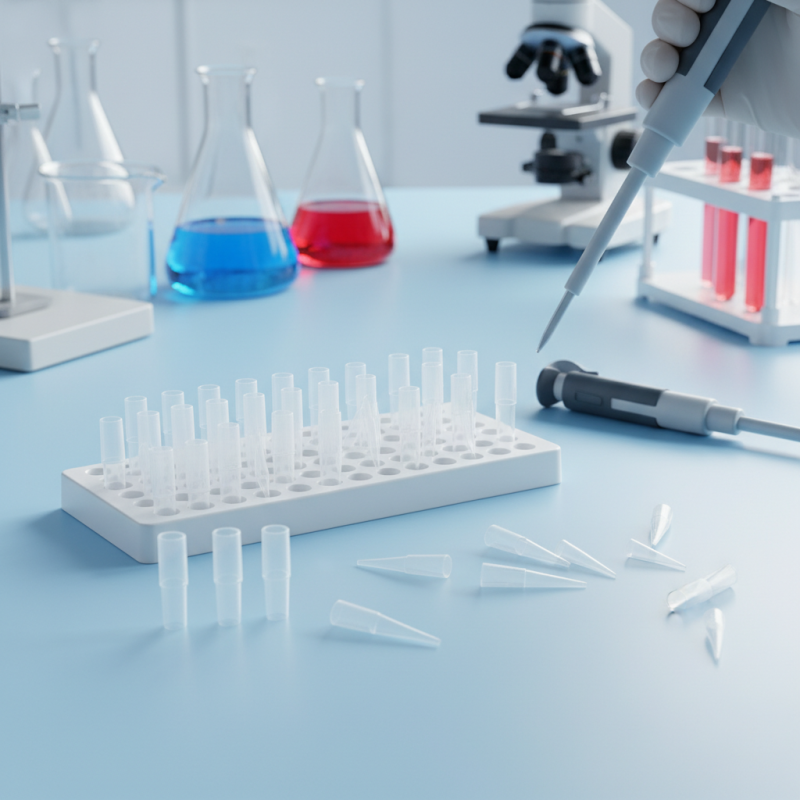
Definition and Functionality of Pipette Tips in Laboratories
Pipette tips play a crucial role in laboratory settings. These small, disposable attachments allow precise measurement and transfer of liquids. Their design minimizes contamination and ensures accuracy in experiments. According to a recent report, over 20 billion pipette tips are used annually in laboratories worldwide. This reflects their importance in fields like biology, chemistry, and medicine.
The functionality of pipette tips extends beyond mere liquid handling. Different types of tips, such as filter tips, are designed to protect samples from contamination. Some tips are designed for specific volumes. Inaccuracies can lead to invalid results. A study showed that improper pipetting can result in 10-15% of variance in sample measurements. Such discrepancies are detrimental, underlining the need for quality and reliable pipette tips.
Nonetheless, the choice of pipette tips often goes overlooked. Researchers may prioritize cost over quality. This can lead to serious errors in high-stakes experiments. It is essential to evaluate the right materials and certifications of pipette tips. Standardized tests can help determine their reliability for critical applications. Understanding this is vital in maintaining the integrity of laboratory work.
Types of Pipette Tips: Standard, Filtered, and Specialized Variants
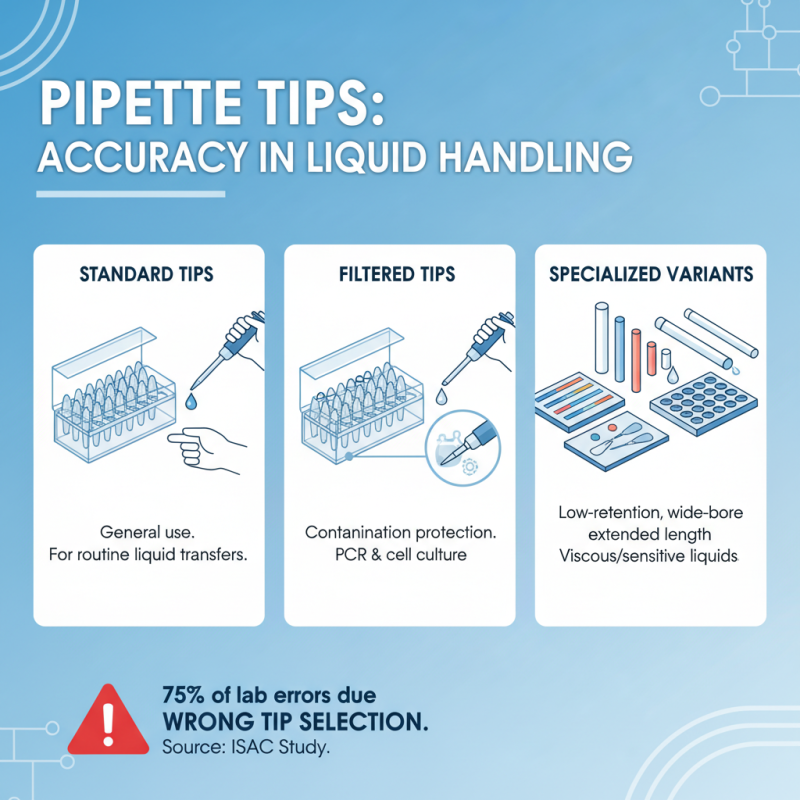
Pipette tips are essential in laboratory settings. They come in various types, including standard, filtered, and specialized variants. Each type serves different purposes and enhances accuracy in liquid handling. In a study conducted by the International Society for Analytical Chemistry, about 75% of lab technicians noted that improper pipette tip selection can lead to contamination and inaccurate measurements.
Standard pipette tips are widely used for general applications. They are made of plastic and fit most pipettes. However, they are not always ideal for sensitive experiments. Contamination risks remain high if not handled properly. Filtered pipette tips provide a barrier against aerosols and contaminants. According to laboratory data, using filtered tips can reduce the risk of cross-contamination by up to 98%. These are particularly valuable in molecular biology and microbiology labs.
Specialized variants, like low retention tips, are designed for viscous or volatile samples. They help minimize sample loss, which can be critical in quantitative assays. A recent report highlighted that researchers using specialized tips reported improved accuracy in reagent transfer by 30%. Yet, these tips can be more expensive, raising questions about cost-effectiveness in routine tasks. The choice of pipette tips reflects the need for precision and reliability in laboratory workflows, reinforcing the importance of understanding their specific applications.
Material Composition of Pipette Tips and Their Impact on Performance
Pipette tips are essential for accurate liquid handling in laboratories. Their material composition plays a crucial role in their performance. Common materials include polypropylene and polystyrene. Polypropylene tips are more flexible, while polystyrene tips are rigid and transparent. This choice impacts both precision and ease of use.
Selecting the right material can affect the sample's integrity. For instance, certain chemicals may react negatively with specific plastics. Users should always consider compatibility. This oversight can lead to experiment errors. Additionally, while many assume all tips perform the same, variations in manufacturing quality lead to inconsistencies. Imperfect tips can introduce air bubbles or cause liquid retention, which further complicates results.
Laboratories must prioritize material quality. Cheap options might seem attractive, but they often come with hidden costs. Researchers should regularly assess their pipette tips to ensure reliability. A deep understanding of material properties can enhance overall experimental outcomes. There’s always a balance to strike between cost and performance. When in doubt, conduct tests to determine the best fit for specific applications.
Pipette Tip Material Composition and Performance Comparison
Best Practices for Selecting and Using Pipette Tips in Experiments
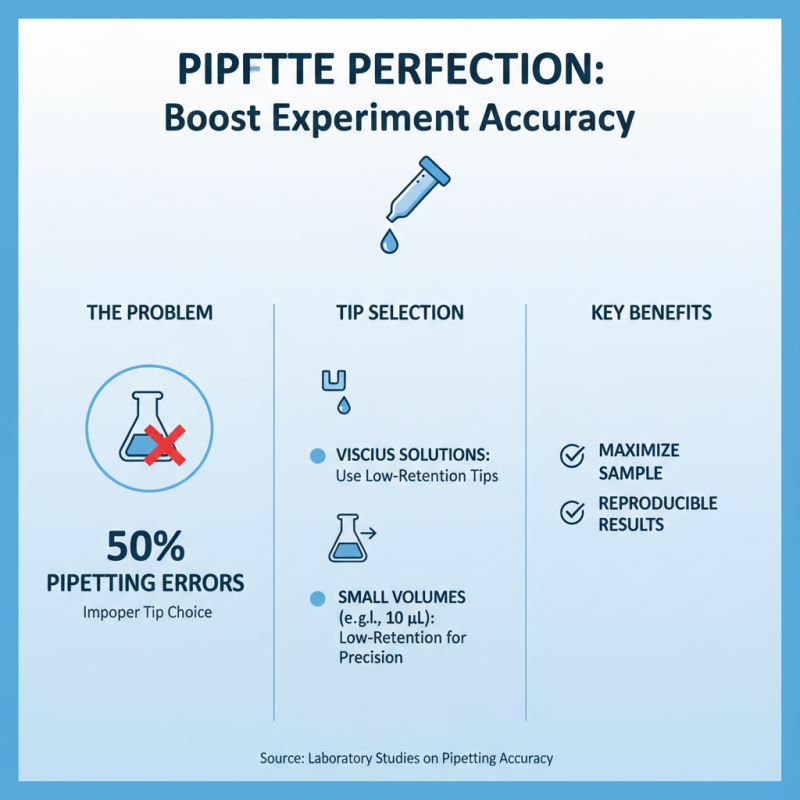
Selecting the right pipette tips is crucial in laboratory settings. They can significantly impact accuracy and precision. According to studies, up to 50% of pipetting errors stem from improper tip selection. A standard 10 μL pipette may require low-retention tips when dealing with viscous solutions. These tips minimize sample loss and ensure reliability.
Fitting pipette tips securely is also essential. A loose fit can lead to inconsistent volume delivery. Laboratory reports indicate that even minor deviations in pipetting can create substantial variability in results. Researchers should routinely check the compatibility of tips with respective pipettes. Regular calibration ensures that no measurement inaccuracies skew experimental data.
Adaptation to specific experiments is necessary as well. Not all tips are created equal. For example, some applications benefit from filter tips, which prevent contamination. However, filter tips can increase resistance and slow down pipetting. Ultimately, selecting the most appropriate pipette tip requires thoughtful consideration. Balancing efficiency and accuracy can be challenging. Ongoing training can help standardize best practices among laboratory personnel.
The Role of Pipette Tips in Ensuring Precision and Accuracy in Lab Work
Pipette tips play a crucial role in laboratory work. They ensure precision and accuracy in transferring liquids. When using pipettes, tips are the interface that holds and dispenses the sample. Their design can significantly affect the reliability of experiments.
One common challenge is choosing the right pipette tip. Tips vary in materials and volumes. Some are designed for certain types of liquids. A mismatch can lead to inaccurate measurements. For instance, viscous samples may require specialty tips. Failure to use appropriate tips can compromise results.
It's also important to properly handle pipette tips. Contamination is a real risk in labs. Touching the tip or exposing it to open air can introduce variables. Even slight errors can lead to major discrepancies in findings. Recognizing these challenges is key to improving lab accuracy.
What is a Pipette Tip and Its Importance in Laboratory Applications?
| Attribute |
Description |
Importance |
| Material |
Commonly made from polypropylene or polyethylene. |
Durable and chemically resistant, ensuring sample integrity. |
| Size |
Available in various volumes (e.g., 10μL, 200μL, 1000μL). |
Allows precise liquid handling for different applications. |
| Tip Fit |
Designed for universal fit or specific pipette brands. |
Ensures a secure seal for accuracy in liquid transfer. |
| Type |
Standard, filter, and low retention tips. |
Each type serves unique purposes, like preventing aerosol contamination. |
| Application |
Used in biology, chemistry, and clinical labs. |
Critical for experiments requiring precise liquid measurement. |