Top 10 Air Pollution Detectors for Global Buyers in 2026?
In 2026, the demand for effective Air Pollution Detectors has never been more critical. According to Dr. Emily Carter, an expert in environmental science, "The right air pollution detector can make a significant difference in public health." With increasing urbanization, people are increasingly exposed to harmful pollutants. This awareness drives innovation and investment in advanced air monitoring technologies.
As cities expand, air quality suffers. Many people are unaware of the air they breathe daily. This leads to health issues like asthma and other respiratory problems. Quality air pollution detectors provide real-time data, helping individuals and communities make informed decisions. But not all detectors are created equal. Some may lack calibration accuracy or essential features.
Selecting an air pollution detector requires careful consideration. Factors such as sensitivity, ease of use, and data reliability are crucial. Users often struggle with the numerous options available. Understanding how to choose the best device is essential for effective monitoring. Investing in a high-quality air pollution detector is an essential step towards a healthier future.
Overview of Air Pollution Detection Technologies in 2026
In 2026, air pollution detection technologies have progressed significantly. Innovations in sensor technology allow for real-time monitoring of air quality. Portable devices now provide accurate readings in almost any environment. Users will find ease in accessing data through mobile applications.
Machine learning plays a crucial role in processing data. Algorithms help identify pollution patterns and sources. This capability enhances the ability to predict air quality changes over time. However, reliance on technology raises questions about data privacy and accuracy. Many users still struggle to interpret complex data reports.
The integration of IoT devices improves connectivity and information sharing. Community-driven platforms enable citizens to contribute to air quality monitoring. Despite these advancements, standardization across devices remains a challenge. Users often face discrepancies between readings from different manufacturers. Balancing technological benefits with accessibility and reliability will be key for future development.
Top 10 Air Pollution Detectors for Global Buyers in 2026
Key Features to Consider When Choosing an Air Pollution Detector
When selecting an air pollution detector, consider the key features that matter most. First, the sensing technology used is crucial. Common types include electrochemical sensors, laser-based systems, and infrared sensors. Each type offers varying levels of accuracy and response time. According to the World Health Organization, reliable detectors can identify fine particulate matter (PM2.5) and volatile organic compounds (VOCs).
Portability is another essential factor. A lightweight and compact design can enhance usability in different environments. Some reports point out that ease of calibration is often overlooked. Detectors may require periodic calibration to maintain accuracy. Many users fail to keep track of this, which can lead to misleading readings. Detection range is equally important. Some detectors perform well in small areas but struggle in larger spaces. This disparity can affect air quality assessments considerably.
Battery life must not be ignored. A long-lasting battery ensures reliable performance during extended periods. Short battery life may result in frequent replacements, adding to maintenance costs. Users must also review customer support options. Reliable support can be invaluable, especially when difficulties arise with the device. Opting for a detector without adequate support can lead to frustration and unmet expectations.
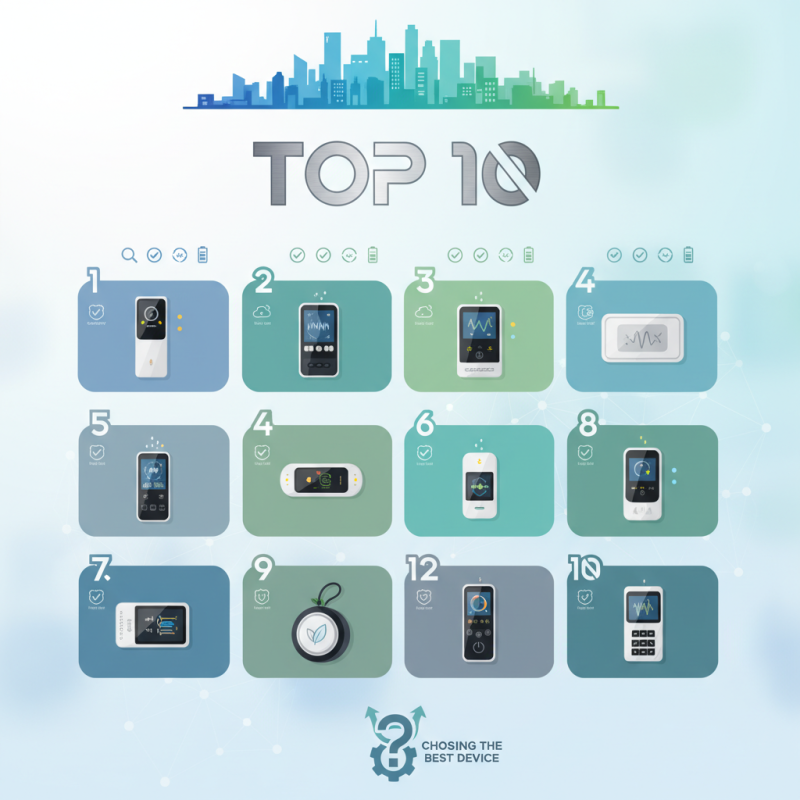
Top 10 Air Pollution Detectors for Global Buyers in 2026
| Detector Model | Key Features | Measurement Range | Connectivity | Battery Life |
| Model A | PM2.5, PM10, VOC, CO2 | 0-500 µg/m³ | Wi-Fi, Bluetooth | 12 hours |
| Model B | PM1, PM2.5, PM10 | 0-1000 µg/m³ | Wi-Fi, App Control | 15 hours |
| Model C | NO2, O3, PM2.5 | 0-200 ppb | Bluetooth | 10 hours |
| Model D | PM2.5, VOC | 0-300 µg/m³ | Wi-Fi | 24 hours |
| Model E | PM2.5, CO | 0-1000 µg/m³ | Wi-Fi, Bluetooth | 18 hours |
| Model F | NOx, PM10 | 0-500 ppb | Wi-Fi | 20 hours |
| Model G | PM2.5, PM10, CO2 | 0-800 µg/m³ | Bluetooth, App Control | 22 hours |
| Model H | SO2, CO, O3 | 0-50 ppb | Wi-Fi, GSM | 16 hours |
| Model I | PM2.5, PM10, VOC | 0-400 µg/m³ | Bluetooth | 14 hours |
| Model J | PM2.5, CO | 0-1200 µg/m³ | Wi-Fi, App Control | 19 hours |
Top 10 Air Pollution Detectors: An In-Depth Review
Air pollution is a growing concern worldwide. The World Health Organization (WHO) estimates that 4.2 million premature deaths occur annually due to outdoor air pollution. Many individuals seek solutions to monitor and improve air quality in their environments. Air pollution detectors have become essential tools in this quest.
Choosing the right air pollution detector is not simple. Many models vary by accuracy, range, and features. For instance, a report from the International Society for Environmental Monitoring highlights that high-end detectors offer precision within a 10% margin. However, some budget options may lack this level of reliability, leading users to question their effectiveness. Furthermore, connectivity features, such as mobile app integration, play a critical role in user engagement, allowing for real-time data access.
Despite advancements in detection technology, some challenges remain. Many devices struggle to measure specific pollutants accurately. For example, volatile organic compounds (VOCs) can be elusive. A study published by Environmental Science & Technology reveals that only a handful of detectors can track these compounds effectively. Users might find themselves needing to consult multiple sources for comprehensive data. Ultimately, while the landscape of air pollution detectors is promising, more improvements are needed to ensure consistent accuracy and reliable performance.
Comparative Analysis of Pricing for 2026 Air Pollution Detectors
As global awareness of air pollution increases, the demand for effective air pollution detectors rises. A comparative analysis of pricing reveals significant variations across different models and features. Reports indicate that basic detectors start around $50, while advanced models can exceed $500. The disparity in prices highlights varying technology levels, accuracy, and monitoring capabilities.
Features such as real-time data collection and integration with mobile apps are driving up costs. According to industry research, the average price for reliable detectors tailored for urban environments is approximately $150 to $300. This range targets consumers seeking decent accuracy without breaking the bank. However, consumers must evaluate what they need versus what they will use.
Not all expensive detectors guarantee superior performance. Some high-priced models are complex and may overwhelm the average user. A recent survey indicated that nearly 35% of users find advanced features unnecessary. Simplicity remains a key factor. Balancing cost and functionality is essential for making an informed purchase. Buyers should seek quality data on device reliability rather than solely focusing on price tags.
Future Trends in Air Quality Monitoring and Pollution Detection
The future of air quality monitoring is shifting significantly. A recent report estimates that the global air quality monitoring market will reach $6.4 billion by 2026. This growth is driven by increasing health concerns and regulatory standards concerning air pollution. Advanced sensors are becoming more accessible and affordable, allowing for smarter and more widespread detection of air pollutants.
Innovations like low-cost sensors are changing the landscape. These devices can measure particulate matter, volatile organic compounds, and other hazardous substances. Users can access real-time data through mobile apps, making air quality monitoring personal and immediate. However, the accuracy and reliability of these devices often raise questions. Ensuring consistency across different models is crucial.
Data from the World Health Organization indicates that 91% of the world’s population lives in areas with poor air quality. This alarming statistic underscores an urgent need for robust pollution detection methods. As technological advancements continue, challenges remain in terms of data integration and long-term reliability. Collecting actionable insights will be essential for public health strategies.