Microscope Slide Storage Tips for Proper Organization?
Microscope slide storage is a critical aspect of laboratory organization and efficiency. Properly storing slides ensures that valuable specimens remain intact and easily accessible. According to a recent report by the National Institute of Health, improper slide storage can result in a 30% decrease in sample integrity over time. Dr. Emily Harris, a leading expert in microscopy at the University of Science, emphasizes, "Organized slide storage not only protects specimens but enhances research productivity."
Inadequately managed microscopy slides can lead to confusion and errors during experiments. Misplaced or damaged slides waste precious time and resources. A well-structured storage system minimizes these risks. However, many laboratories neglect this crucial organization step. Simple measures can drastically improve the situation, such as labeling slides and using appropriate containers.
Despite the importance of effective microscope slide storage, challenges persist. Laboratories often lack the space or equipment for optimal storage systems. Researchers may find their slides unsuitable for long-term preservation. Addressing these issues requires thoughtful planning and a commitment to maintaining order.
Best Practices for Organizing Microscope Slides for Efficient Use
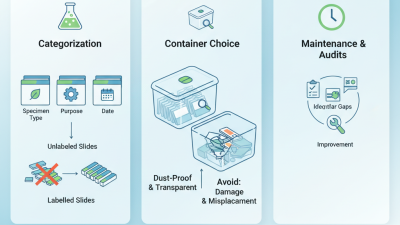
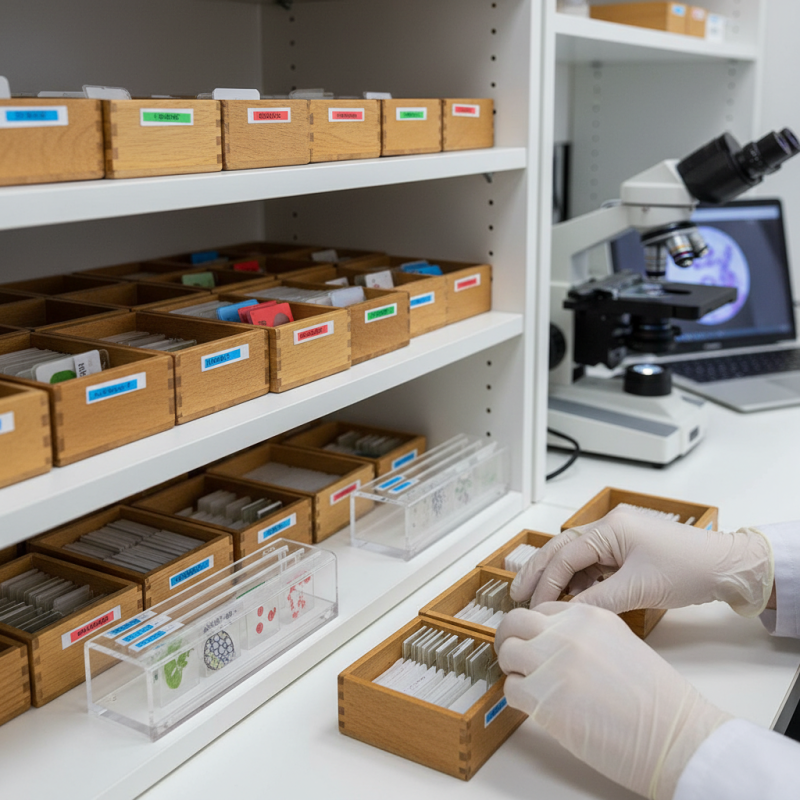
Organizing microscope slides effectively can enhance your research and education. A well-organized slide collection saves time and reduces frustration. Start by using slide boxes or trays designed for storage. Label each slide clearly, indicating the specimen type, date, and any other relevant details. This will make retrieval faster. However, it’s easy to overlook clarity in labeling. Poor handwriting can lead to confusion later.
Consider grouping slides by category. For example, classify them as animal, plant, or fungi specimens. This allows for quick access to the type of slide needed for a specific experiment. You might think this strategy is fail-proof, but sometimes categories overlap. It’s important to reflect on your organization regularly. Are there slides that don’t fit in any category? Could some slides be better placed elsewhere?
Regular maintenance is key. Check for damaged slides and replace them as needed. Dust and environmental factors can affect the quality of your specimens, so keep storage areas clean. Even with the best practices, there's always room for adjustment. Stay open to new ideas and refine your system as your collection grows.
Microscope Slide Usage Frequency Chart
Labeling Techniques to Enhance Slide Identification and Retrieval
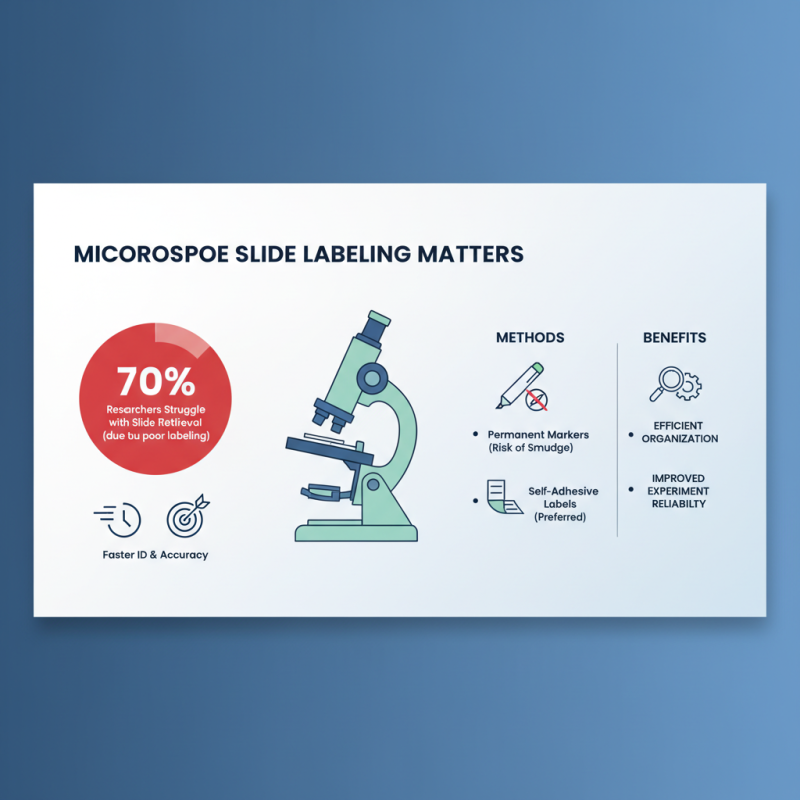
Labeling techniques play a vital role in microscope slide organization. A recent survey indicated that nearly 70% of researchers face challenges in slide retrieval due to poor labeling practices. Efficient labeling not only speeds up the identification process but also ensures accuracy in experiments. Using permanent markers can be beneficial, but there’s a risk of smudging over time. Opting for self-adhesive labels might be a preferred alternative.
Color coding is another effective strategy. A study revealed that color-coded labels enhance retrieval speed by 30%. This method allows quick identification of slide categories. However, it can also lead to confusion if too many colors are used. Consistency in color application is essential. Additionally, consider using a labeling system that includes key information, such as sample type and date. This adds context but can become cumbersome if details are excessive.
Furthermore, maintaining a dedicated inventory system is crucial. Many labs overlook this aspect. A digital log of slides can prevent duplication and aid in location tracking. But, this requires regular updates, which can be neglected. Balancing detailed records with practicality is key. Ultimately, refining labeling techniques can vastly improve slide management.
Optimal Environmental Conditions for Storing Microscope Slides
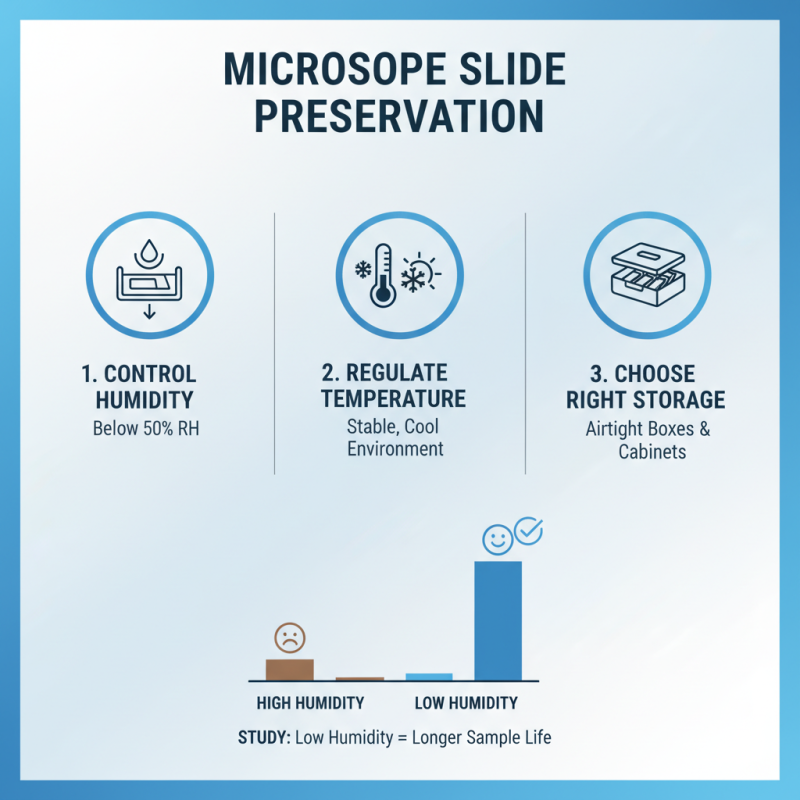
Storing microscope slides requires careful attention to environmental conditions. The ideal temperature for storage is between 18°C and 24°C. Extreme temperatures can cause damage. Keeping the slides in a dry area is essential. High humidity can lead to mold growth. A dehumidifier may help in very humid environments.
Using a sturdy, insulated container can protect against temperature fluctuations. It’s also wise to keep the slides out of direct sunlight. UV rays can degrade samples over time. Opt for a dark, cool space to maintain the integrity of the slides.
Occasionally, check the storage area for any signs of moisture. Even a small amount can compromise the slides. Regularly clean the container to prevent contamination. Reflection on your organization methods may reveal improvements. Adjusting the storage system based on past experiences can enhance your slide preservation efforts.
Microscope Slide Storage Tips for Proper Organization
| Storage Method |
Optimal Temperature (°C) |
Humidity Level (%) |
Storage Duration |
Notes |
| Slide Box |
20-25 |
30-50 |
Indefinite (if conditions are met) |
Prevent dust and scratches. |
| File Folder |
15-20 |
40-60 |
1-5 years (depends on material) |
Use acid-free materials. |
| Glass Jar |
20 |
40 |
Up to 3 years |
Seal tightly to avoid contamination. |
| Slide Racks |
18-22 |
45-55 |
Indefinite (if maintained) |
Easy access and organization. |
Regular Maintenance and Inventory Practices for Slide Organization
Maintaining an organized microscope slide collection requires consistent practices. Regular inventory checks can help identify missing slides or mislabeling issues. Take time to review your collection every month. This can reveal patterns in usage and highlight slides that may need more attention.
Proper labeling is crucial for organization. Use clear, concise labels for each slide. Include important details such as sample type and date of preparation. However, mistakes can happen. Keep a correction tape nearby for quick fixes. A mislabel can lead to confusion during analysis, so stay vigilant.
Storage conditions impact slide integrity. Ensure slides are stored in a climate-controlled environment. Humidity can affect the quality of the samples. Sometimes, you may notice mold or degradation. If this occurs, take immediate steps to isolate affected slides. Reflect on your storage methods regularly to improve your organizational system.