How to Choose the Best Temperature Logger for Your Needs?
In the ever-evolving world of temperature logging, finding the right device for your specific needs can be challenging. Dr. Emily Chen, a renowned expert in environmental monitoring, once said, "Selecting a temperature logger is not just about accuracy; it’s about understanding your requirements." This statement resonates deeply in an industry where precision and functionality matter.
Temperature loggers serve crucial roles in various sectors. Pharmaceuticals rely on them to maintain product integrity. Food industries depend on their accuracy to ensure safety standards. Yet, many users struggle with choosing the best options. The sheer variety of models and features can be overwhelming. Users often find themselves stuck between wanting advanced features and needing simplicity.
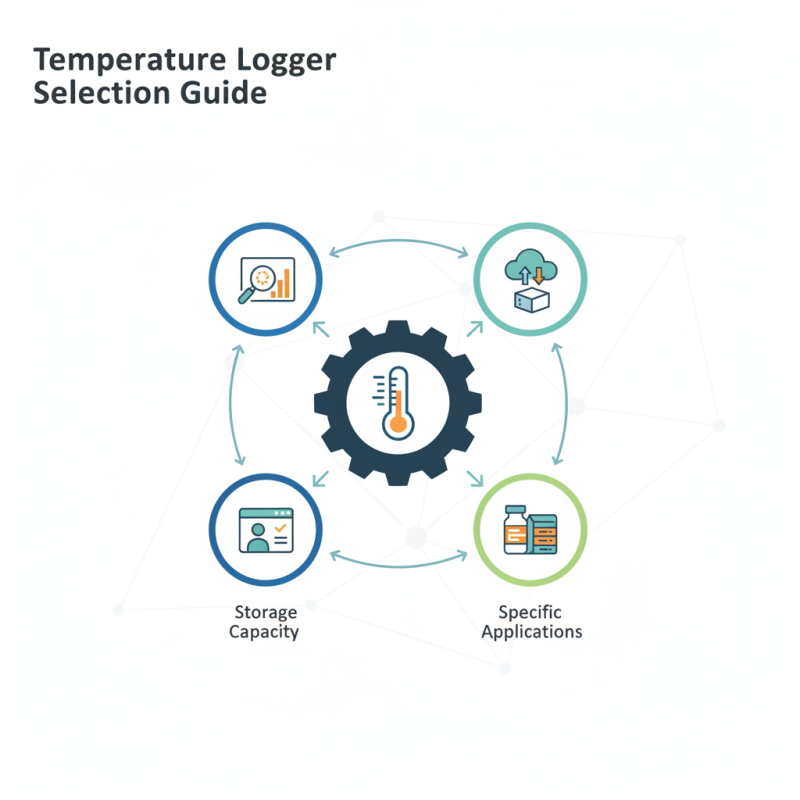
Having expert guidance can clarify the selection process. There’s no one-size-fits-all solution. Each application demands consideration of factors such as data accuracy, storage capacity, and ease of use. It's essential to reflect on your specific requirements before making a choice. In a field where the wrong decision can lead to costly consequences, insightful decisions are paramount. Exploring expert opinions can greatly enhance your understanding of temperature loggers.
Understanding Temperature Loggers and Their Importance
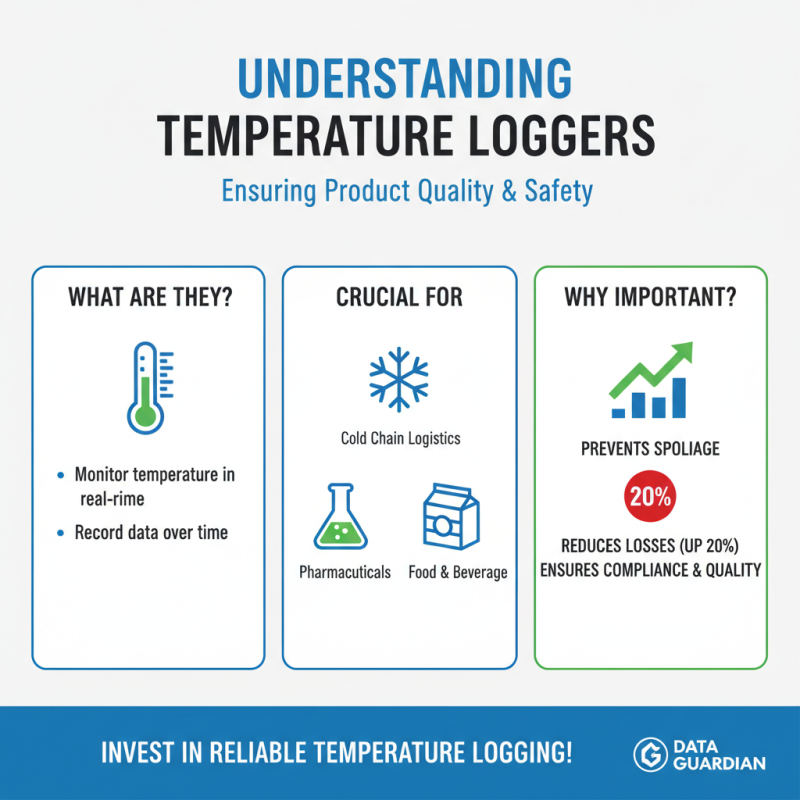
Temperature loggers play a crucial role in various industries, ensuring that products are stored and transported within safe temperature ranges. These devices help monitor conditions in real-time, providing valuable data to support quality control. A recent industry report highlighted that temperature deviations can lead to significant product spoilage, costing businesses up to 20% in losses annually. This underscores the importance of investing in a reliable temperature logging solution.
Understanding the core functions of a temperature logger is essential. They often feature advanced sensors that track temperature fluctuations accurately. Some models can log temperatures at intervals as frequent as every second. This level of detail equips businesses with the information needed to identify trends and issues quickly. However, choosing an appropriate logger requires careful consideration of specific factors, such as the environment, data storage capacity, and compliance needs. It’s not simply a matter of picking a device; it’s about matching it to operational requirements.
However, users must remain aware of the potential for inaccuracies. Sensor drift can occur over time, leading to unreliable readings. Regular calibration of temperature loggers is essential to mitigate this risk. Despite technological advancements, human error can introduce complications during data collection and interpretation. It’s vital to strike a balance between technological reliability and human oversight in ensuring product integrity. The continuous evolution of temperature logging technology also demands ongoing education and adaptability within the workforce.
Key Features to Look for in a Temperature Logger
When selecting a temperature logger, several key features become crucial.
Accuracy is paramount. Reports indicate that even a slight deviation in temperature readings can lead to significant errors. According to the International Society for Automation (ISA), a logger with a precision of ±0.5°C is often the standard for reliable data collection. This accuracy ensures that sensitive items, such as pharmaceuticals and perishables, remain within safe temperature ranges.
Another important factor is the data storage capacity. Some models only hold limited data, which may not suffice during long-term monitoring.
A logger that can store thousands of readings is favorable.
This feature allows for uninterrupted monitoring over extended periods. Wireless options provide remote access to this data, enhancing operational efficiency. However, users should be wary of battery life, as some units drain quickly and may require frequent replacements.
Lastly, user-friendliness cannot be overlooked. Loggers that are complex may lead to user errors.
Data analysis software should be intuitive.
Many professionals prefer easy-to-read displays and straightforward setup procedures. A report from the Sensors Industry Association highlights that
35% of users abandon devices due to complicated functionalities. Investing in a user-friendly logger minimizes the risk of operational mistakes and improves reliability in monitoring temperature-sensitive environments.
Types of Temperature Loggers and Their Applications
Temperature loggers are vital tools across various industries, from food safety to healthcare. Different types of temperature loggers serve specific applications. For instance, data loggers can be categorized into thermocouples, thermistors, and infrared sensors. Each type has unique strengths, making them suitable for certain environments. According to a recent industry report, 57% of food businesses use temperature loggers to maintain compliance with safety standards.
In healthcare, they monitor freezer and refrigerator temperatures for medications. A pharmaceutical industry study found that 90% of temperature excursions occur during transport. Here, data loggers ensure temperature stability. In laboratories, precision is critical. Scientists often prefer thermistor-based loggers for their accuracy. However, they can be more sensitive to environmental factors. This presents challenges, as fluctuations can lead to data inaccuracies.
Industries continuous monitoring will improve overall safety and efficiency. Yet, choosing the right temperature logger requires understanding specific needs. Not every logger suits every application. Businesses must reflect on their unique requirements and existing infrastructure. Ultimately, carefully selecting the appropriate technology is essential for operational success.
How to Assess the Accuracy and Reliability of Temperature Loggers
When selecting a temperature logger, accuracy and reliability are critical factors. High-quality loggers must provide precise readings within specified ranges. Look for devices that meet industry standards, as this often indicates reliability. Review user feedback to gauge common issues with certain models. Many products claim accuracy but may falter under specific conditions.
For a thorough assessment, calibration is essential. Check if the device comes calibrated from the manufacturer. Regular recalibration can help maintain accuracy. Additionally, consider the logger's resolution. A device with a higher resolution can detect smaller temperature fluctuations, enhancing its reliability in sensitive environments.
It’s also wise to examine data integrity features. Some loggers have built-in alarms that alert users to deviations in temperature. However, not all models are consistent in performance when faced with extreme conditions. Many users find that, while a logger may perform well in controlled environments, its reliability can wane in unpredictable settings. Make sure to conduct real-world tests to validate its performance before relying on it fully.
Budgeting for Your Temperature Logger Purchase: What to Consider
When budgeting for a temperature logger, start by assessing your specific needs. Consider what environment the logger will be used in. Will it be in a cold storage unit or an outdoor setting? This influences features needed and costs. Higher accuracy and more advanced features typically come at a higher price. However, simpler models may suffice for basic monitoring.
Consider hidden costs as well. Some devices might appear inexpensive initially but add costs for software or connectivity options later. Evaluate the total cost of ownership, not just the sticker price. You may need to invest in additional sensors or calibration services. Think about the long-term value and how often you will use the logger. This may help justify an upfront investment for quality.
Finally, reflect on your choice. It’s easy to get swayed by marketing claims. Focus on user reviews and expert recommendations to guide your decision. A logger that seems perfect might not meet your long-term needs. Be open to adjusting your budget as you learn more about your requirements and the market.
How to Choose the Best Temperature Logger for Your Needs?
| Feature |
Entry-Level Logger |
Mid-Range Logger |
High-End Logger |
| Price |
$50 - $100 |
$100 - $300 |
$300+ |
| Temperature Range |
-20°C to 60°C |
-40°C to 85°C |
-50°C to 100°C |
| Accuracy |
±0.5°C |
±0.3°C |
±0.1°C |
| Data Logging Capacity |
1,000 readings |
10,000 readings |
100,000+ readings |
| Battery Life |
1 year |
3 years |
5+ years |
| Connectivity Options |
USB |
USB, Bluetooth |
USB, Bluetooth, Wi-Fi |