Choosing the right biohazard specimen bags is a practical decision with serious consequences. These bags protect staff, patients, couriers, and laboratory teams during specimen handling. A weak seal can turn a routine transfer into a contamination concern. Small details matter.
This guide presents seven purchasing tips for healthcare facilities, clinics, laboratories, and research settings. It examines bag thickness, leak resistance, closure design, labeling areas, size options, and supplier documentation. It also considers whether the bag fits your workflow. A large bag may waste space, while a small bag can strain the closure. Neither choice is automatically better.
Look for clear product specifications, consistent manufacturing, and evidence of quality control. Confirm that the bag suits the specimen container, transport method, and storage conditions. Check whether the printed warning symbol remains visible after handling. Bright color alone proves little. A reliable supplier should answer technical questions without vague promises. Documentation should be easy to review.
Real-world use can reveal issues that catalogs miss. A bag may feel strong but tear near the corners. A closure may work well with gloves yet become awkward during busy shifts. These details deserve honest testing. No purchasing checklist is perfect. Staff feedback may expose weaknesses after implementation. The following seven tips help buyers compare products carefully, reduce avoidable handling risks, and select biohazard specimen bags with greater confidence. Safety depends on both product quality and disciplined use.
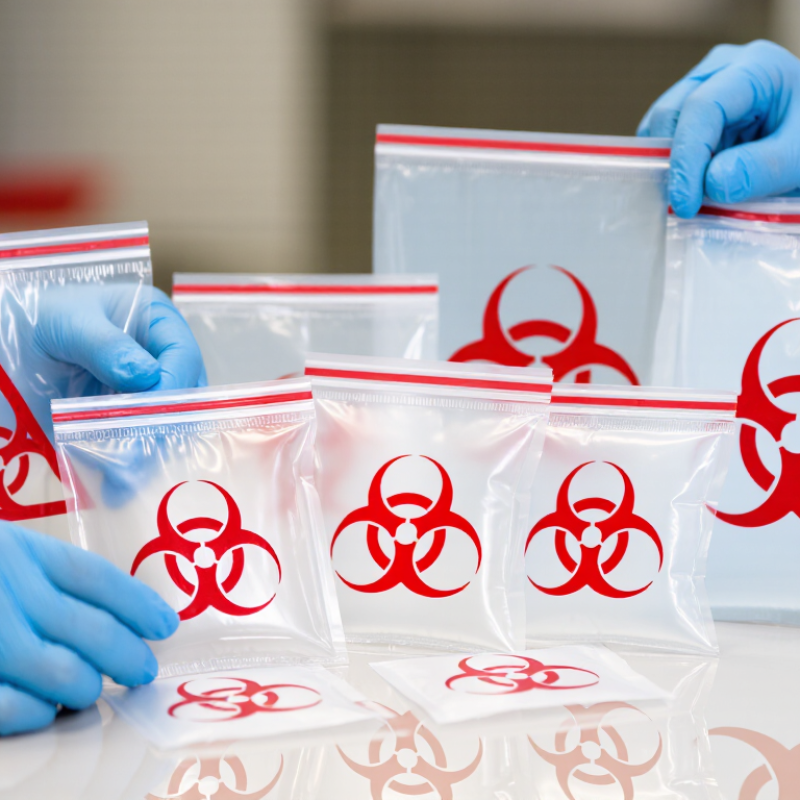
Before comparing closures or absorbency, define the bag’s intended use. Write it in one line: “sealed clinical specimens, 50 mL, refrigerated, domestic transport.” This simple detail prevents vague purchasing decisions.
WHO’s Laboratory Biosafety Manual, fourth edition (2020), places documented risk assessment at the center of laboratory biosafety. Consider specimen type, volume, leakage risk, handling steps, and destination. Do not treat “biohazard” as a complete classification. CDC/NIH’s Biosafety in Microbiological and Biomedical Laboratories, 6th edition, describes four laboratory risk groups. Transport rules use different categories. Under the UN Model Regulations, infectious substances may fall under Category A or Category B. Category B shipments commonly use UN 3373 requirements. Exempt human or animal specimens may follow another pathway.
Purchase specifications should mirror that decision. For routine Category B specimens, check leakproof primary and secondary containment, a rigid outer package, absorbent material, and clear labeling. Ask for validation records, not only a product photograph. Review test methods, temperature ranges, closure integrity, and lot traceability. OSHA’s Bloodborne Pathogens Standard requires leakproof, labeled, or color-coded containers for regulated materials. It does not replace a transport assessment. A bag can pass a leakage test and still fail with a frozen sample. That is easy to overlook. Many teams specify size first. That is backwards. Volume, classification, route, and handler exposure should come first. Recheck the decision with a biosafety officer and carrier requirements before ordering large quantities.
A biohazard specimen bag is more than a clear pouch. Material choice affects puncture resistance, chemical compatibility, and seal performance. Low-density polyethylene offers flexibility, while thicker polyethylene or polypropylene can provide better structural support. Thin film is risky. Check the film thickness, seam quality, and closure design before purchasing.
The WHO Laboratory Biosafety Manual, 4th edition (2020), recommends leak-proof, durable secondary containers for specimen transport. The CDC and NIH Biosafety in Microbiological and Biomedical Laboratories, 6th edition (2020), also emphasize secure primary and secondary containment. A practical inspection should include water-filled leak checks, gentle squeezing, and repeated opening tests. Look for weak corners. Small pinholes may appear only under pressure.
For transport covered by UN3373 Packing Instruction P650, packaging must withstand a 1.2-meter drop test and maintain containment under 95 kPa pressure. These figures are useful buying benchmarks, even when local procedures differ. Select bags with a reliable adhesive or zip closure, reinforced seams, and enough space to prevent overloading. A thicker bag is not automatically safer. Poor sealing can defeat strong film, and rigid packaging may still tear at stressed edges. Recheck supplier test records and lot information, because performance can vary between production batches.
Choosing the right biohazard specimen bag begins with size, closure, and labeling. In routine laboratory receiving, an oversized bag can let containers slide and break. An undersized bag creates pressure around tubes. Select a bag that holds the specimen container comfortably, with room for absorbent material when procedures require it. Do not overfill. That simple mistake is easy to miss.
Tip: Match the closure to the workflow. A reliable zip closure suits frequent access, while an adhesive or heat-sealed design may support more secure transport. The closure should open without tearing the bag. It should also resist leaks when handled upright or during short transfers. Test the seal with an empty bag before regular use. I have found that convenience can sometimes weaken control.
Tip: Make labels readable before the bag leaves the collection area. Include the specimen identifier, collection date, handling instructions, and required hazard marking. Use labels that remain attached on cold, damp surfaces. Keep critical information visible through the outer surface, not hidden beneath folds. A separate document pouch can protect paperwork from contamination and moisture.
Tip: Check the design under real conditions. Place a representative container inside, close the bag, and inspect the label position. Can staff read it while wearing gloves? Can they open it without touching the specimen area? These small checks expose poor design choices. Requirements may vary by facility, so confirm the final selection against current procedures and trained staff feedback.
7 Tips for Buying Biohazard Specimen Bags
Verify the compliance label before comparing prices. A suitable specimen bag should identify its intended use, material, size, and closure method. Check whether the packaging follows applicable transport and laboratory requirements. The WHO Laboratory Biosafety Manual, 4th edition, recommends risk-based selection rather than relying on appearance alone. Ask for current test reports, not vague claims. A clean-looking bag proves very little.
Sterilization needs careful attention. Confirm whether the bag is sterile, non-sterile, or supplied for pre-cleaned handling. Request the sterilization method, validation record, expiry date, and lot traceability. The WHO Global Report on Infection Prevention and Control estimates healthcare-associated infections affect 7 in 100 patients in high-income countries and 15 in 100 in low- and middle-income countries. A bag cannot prevent every contamination event. Still, weak packaging can add avoidable risk. My practical mistake was treating “sterile” as a complete quality statement.
Packaging details matter during real work. Choose leak-resistant primary bags with secure closures and enough writing space. Review seal strength, puncture resistance, temperature limits, and storage conditions. OSHA’s Bloodborne Pathogens Standard emphasizes containers that prevent leakage and are closable. Inspect cartons for crushed corners, moisture, broken seals, or missing labels. Keep samples separated by risk and handling route. Test a small lot first. Supplier paperwork can look perfect, while a stiff closure may fail with gloved hands.
Supplier comparison should begin with documented quality, not a low unit price. The WHO-UNICEF Joint Monitoring Programme reported in 2023 that one in three healthcare facilities lacked safe waste management services. That figure makes leak resistance, clear labeling, and traceable production essential. Ask for material specifications, seal testing results, lot identification, and samples from actual production. A transparent supplier should explain thickness, closure strength, and compatibility with your containers.
Pricing can be misleading. Compare the landed cost, including bags, printing, cartons, freight, insurance, and customs charges. Request tiered quotes for several order volumes. Also check minimum order quantities and price validity periods. A cheaper bag may require stronger secondary packaging or create more handling waste. I have found that procurement teams sometimes compare only the per-bag figure. That is a weak comparison.
Storage life deserves equal attention. Request the manufacturing date, validated shelf life, and recommended storage conditions. Heat, sunlight, and humidity can weaken plastic and adhesives. Keep cartons raised from the floor, away from chemicals, and clearly rotated by date. Delivery terms should state lead time, shipment responsibility, inspection rights, and remedies for shortages. Incoterms should be written plainly. The WHO Laboratory Biosafety Manual, fourth edition, emphasizes secure, leak-proof containment and reliable transport practices. Still, supplier documents are not always complete. Recheck them before ordering, especially when storage may exceed one year.