2026 Top Trends for BD Vacutainer Tubes You Should Know?
In the evolving world of medical laboratories, BD vacutainer tubes play a crucial role. These tubes are essential for collecting blood samples efficiently. In 2026, various trends will shape their usage and design. Understanding these trends can improve patient care and laboratory efficiency.
The focus on safety in the design of BD vacutainer tubes is growing. New materials and features aim to minimize contamination risks. However, challenges remain. Not all innovations will succeed in their intended purpose. Some may even complicate processes that are currently straightforward.
Environmental concerns also influence the future of BD vacutainer tubes. Sustainable materials are becoming a priority. Companies are exploring options that reduce plastic waste. Yet, balancing quality with eco-friendliness will not be easy. The industry must reflect on the impact of their choices.
Key Innovations in BD Vacutainer Tube Design for 2026
In 2026, the design of blood collection tubes is set to evolve significantly. Innovations will focus on improving usability and safety. New materials may be introduced, aiming to reduce the risk of contamination. Some designs might even feature colors or patterns to enhance identification. These changes aim to streamline the blood collection process.
Improved ergonomic features could reshape how healthcare professionals handle these tubes. Concepts like finger grips or textured surfaces might emerge. Such enhancements would minimize slippage during use. There could also be advancements in closure systems, reducing the chances of leaks. Yet, there remains a challenge to balance functionality with cost-effectiveness.
As these developments unfold, it's essential to remain vigilant. Are these innovations genuinely enhancing efficiency? Are they addressing real-world needs in medical settings? Continuous feedback from users is crucial. This will help ensure that advancements meet practical demands rather than just aesthetics. The journey of innovation in blood collection tubes must remain grounded in reality.
2026 Top Trends for BD Vacutainer Tubes You Should Know? - Key Innovations in BD Vacutainer Tube Design for 2026
| Trend |
Description |
Expected Impact |
Innovation Type |
| Eco-Friendly Materials |
Introduction of sustainable materials for tube manufacturing to reduce environmental footprint. |
Lower carbon emissions and improved waste management. |
Material Innovation |
| Smart Technology Integration |
Implementation of RFID tags for tracking and managing samples efficiently. |
Enhanced sample management and improved lab efficiency. |
Technology Integration |
| User-Friendly Design |
Redesigned tubes for easier handling and reduced risk of breakage. |
Increased safety and user satisfaction. |
Design Innovation |
| Customization Options |
Increase in tailored tube solutions to meet specific laboratory needs. |
Greater flexibility and improved operational efficiency. |
Customization |
| Integrated Safety Features |
Developing tubes with built-in safety features to prevent needle stick injuries. |
Enhanced safety for healthcare professionals. |
Safety Innovation |
Advancements in Blood Collection Technology: A 2026 Overview
The field of blood collection technology is evolving rapidly. In 2026, advancements are leading to more efficient and safer collection practices. Recent reports indicate a projected growth of the blood collection market, expected to reach nearly $5 billion by 2026. This is driven by increased healthcare demands and innovations.
Tube design is undergoing significant changes. For instance, clear labeling and color coding enhance the identification of sample types. Blood collection tubes are increasingly made with materials that minimize contamination risk. Innovations like integrated collection devices are also being explored. However, not every advancement yields perfect results. User training is crucial; improper handling can still lead to errors.
Automation in laboratories is on the rise too. By 2026, automated systems could process samples up to 90% faster than manual methods. Nonetheless, there are concerns about the reliance on technology. Malfunctions can lead to delays in diagnosis. Balancing automation with trained personnel remains a challenge in modern blood collection practices.
Market Growth Projections for BD Vacutainer Tubes Through 2026
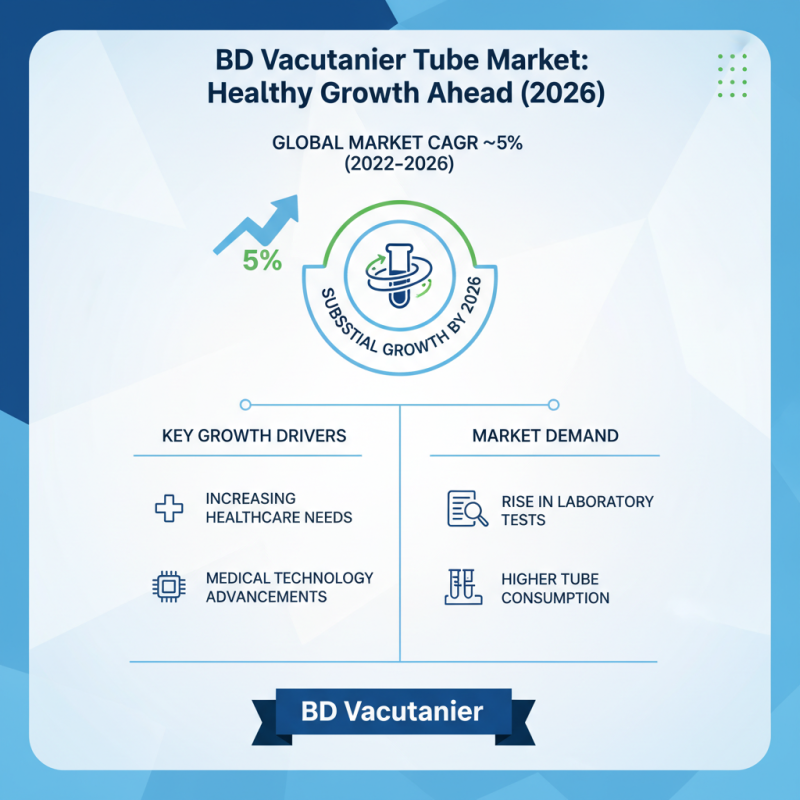
The BD Vacutainer tube market is projected to see substantial growth by 2026. According to recent reports, the global market is expected to grow at a compound annual growth rate (CAGR) of approximately 5% during this period. This growth is largely driven by increasing healthcare needs and advancements in medical technology. The demand for laboratory tests is on the rise, leading to higher consumption of these tubes.
In addition, the need for specialized blood collection processes is driving innovation. Some segments like EDTA tubes show over 10% growth annually. However, not all segments may witness the same enthusiasm. Variability in market regions affects distribution and supply chains. The availability and accessibility of these tubes in emerging markets remain areas for reflection. There is a potential gap that might hinder growth efforts.
Investments in research and development can lead to better, more efficient products. However, manufacturers also face challenges from strict regulations and competition. Monitoring quality and compliance will be crucial as the market evolves. As demand skyrockets, ensuring sustainability and efficiency in production processes will be more important than ever.
Sustainability Trends in Medical Tubing: The Role of BD Vacutainer
Sustainability is increasingly important in the medical industry. This trend puts pressure on manufacturers to innovate. The production of medical tubes, specifically those used in blood collection, faces scrutiny. Companies strive to reduce environmental impact while maintaining safety and quality standards.
Recycling and sustainable materials are gaining traction. Some tubes could be made from biodegradable materials. The challenge lies in ensuring these materials meet strict medical regulations. Experts debate whether biodegradable options can be effective and safe. Uncertainties linger, raising questions about long-term functionality.
Moreover, consumer awareness is rising. Healthcare providers are seeking greener options. They want solutions that align with their commitment to sustainability. However, the balance between eco-friendliness and functionality is delicate. Striking the right balance will be a continuous conversation within the industry. Each step forward brings lessons and opportunities for improvement.
2026 Top Trends for BD Vacutainer Tubes
Impact of Regulatory Changes on BD Vacutainer Tube Production by 2026
Regulatory changes are shaping the future of tube production. The focus is on improving safety and quality. Standards are becoming stricter across many regions. This affects materials, manufacturing processes, and testing methods. Companies are adapting their operations to comply with these new regulations. It's not just about following rules; it's about
ensuring patient safety.
These changes require investment in advanced technologies. Companies may face challenges in updating their manufacturing lines. They will also need to train staff on new compliance measures. The transition can be costly and time-consuming. However, it presents an opportunity for innovation. Organizations that embrace these changes can enhance their market position.
The impact of regulations can be profound. Companies must navigate complex frameworks. They might struggle with uncertainty and shifting guidelines. Each adjustment could lead to production delays. Yet, this could spur better designs and materials. The goal is to create tubes that are safe and effective for users. Embracing these changes brings both difficulties and potential growth.