Choosing among the 10 best cryogenic vials requires more than comparing prices or catalog photographs. Global buyers need containers that protect valuable specimens during freezing, storage, transport, and retrieval. The correct vial should match the application, storage temperature, closure design, and handling workflow. A cracked tube or loose cap can compromise years of research within seconds.
Market research from Grand View Research and MarketsandMarkets identifies biobanking, cell therapy, pharmaceutical development, and assisted reproduction as major drivers of cryogenic storage demand. These sectors increasingly require traceable, low-contamination consumables. ISBER’s Best Practices also emphasizes validated storage systems, clear labeling, controlled access, and documented temperature management. Those details matter.
This guide evaluates cryogenic vials through practical buyer criteria. We examine polypropylene quality, internal or external threading, cap security, sterility, RNase- and DNase-free certification, working volume, barcode compatibility, and resistance to repeated temperature changes. Some products are rated for temperatures near -196°C in liquid nitrogen vapor systems, but performance depends on the manufacturer’s instructions and storage method.
Price alone is misleading. A cheaper vial may create higher costs through breakage, leakage, or difficult sample identification. Global buyers should also request certificates, lot information, packaging details, and regional compliance documents before ordering. Supplier claims still require verification. That is where many comparisons become imperfect.
The following selection focuses on documented specifications, real laboratory usability, and supply reliability across international markets. It is not a universal ranking. Storage conditions differ, and the best choice for a biobank may not suit a clinical laboratory.
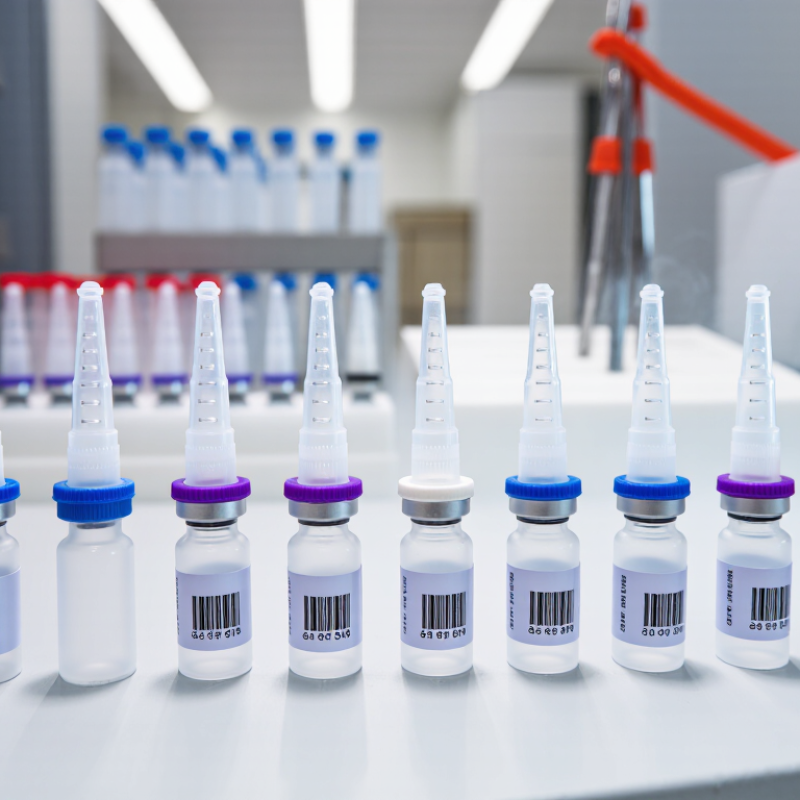
Cryogenic vials are small, but their storage demands are exacting. Most are made from low-temperature polypropylene, which remains flexible during deep freezing. A secure cap, reliable sealing ring, and clear graduations help prevent leakage and identification errors. External-thread designs can reduce contamination risk around the sample opening.
For many biological samples, storage below -150°C is preferred for long-term stability. Vapor-phase liquid nitrogen storage often limits direct contact with liquid nitrogen, but each vial must be validated for that method. Samples should cool gradually, commonly near 1°C per minute, unless the protocol requires another rate. Rapid freezing may damage sensitive cells. It happens more easily than expected.
Use labels that remain readable at cryogenic temperatures. Record the vial location, sample type, preparation date, and responsible operator. A digital inventory system adds protection, but handwritten backup records can still matter during equipment failure. Store vials in compatible boxes and keep them upright when practical. Avoid repeatedly opening storage vessels, since temperature changes can accumulate.
Inspect every vial before use. Reject units with cracked walls, distorted caps, faded labels, or visible frost around the seal. Wear suitable thermal gloves, face protection, and protective clothing when handling cryogenic materials. Storage tanks need temperature monitoring, alarm checks, ventilation, and planned refill procedures. I would not rely on one sensor or one person’s memory. A documented inspection schedule is safer, although real laboratories sometimes miss a check during busy periods.

Comparing cryogenic vials worldwide starts with their actual storage environment, not a product photograph. Ask whether each vial is rated for vapor-phase or liquid-phase nitrogen storage. Temperature ratings should match the laboratory’s validated procedure. Small details matter. Polypropylene quality, wall thickness, and dimensional stability affect breakage risks during freezing and thawing. A secure cap, clear graduations, and a dependable sealing ring also support daily handling.
For global purchasing, inspect evidence rather than relying on marketing claims. Request lot-specific certificates, sterilization records, and testing data for sterility, endotoxins, RNase, and DNase. Manufacturing controls aligned with recognized quality systems can improve supplier confidence. Check whether labels remain readable after condensation, frost, and repeated handling. Language, measurement units, and traceability fields should suit the receiving country and laboratory system. A missing batch reference creates unnecessary uncertainty.
Packaging and logistics deserve equal attention. Vials should arrive protected from impact, moisture, and temperature abuse. Review shipping validation, carton strength, and inspection procedures at delivery. In practical laboratory assessments, a vial may perform well in storage but feel awkward when gloved. That matters. A perfect vial does not exist. Some buyers overvalue low pricing and overlook cap fit, rack compatibility, or sample recovery. Comparing these details with real workflow tests gives a more reliable purchasing decision, although test conditions may still fail to represent every laboratory.
| Rank | Vial Configuration | Typical Capacity | Primary Material | Temperature Suitability | Closure Design | Common Sterility Options | Typical Applications | Key Buying Criteria | Important Verification Point |
|---|---|---|---|---|---|---|---|---|---|
| 1 | External-Thread Polypropylene Vial | 1.0–2.0 mL | Medical-grade polypropylene; polyethylene cap | Generally suitable for storage in the nitrogen-vapor phase, commonly down to approximately −196°C when specified by the manufacturer | External thread with silicone washer or sealing insert | Non-sterile, sterile, and gamma-irradiated versions are commonly available | Cell banks, biobanks, DNA, RNA, proteins, and general laboratory samples | Low contamination risk, readable labeling area, reliable cap sealing, and compatibility with storage racks | Confirm whether the specific vial is approved for liquid-nitrogen immersion; not all cryovials are suitable for direct liquid-phase storage |
| 2 | Internal-Thread Cryogenic Vial | 1.0–2.0 mL | Polypropylene body with polypropylene cap | Commonly designed for ultra-low-temperature and vapor-phase cryogenic storage | Internal thread; may include an O-ring or silicone sealing washer | Sterile, non-pyrogenic, and nuclease-free options are available | Clinical research, cell culture, molecular biology, and regulated sample storage | Compact outer profile, secure closure, cap ergonomics, and reduced risk of cross-contact from external threads | Check cap-to-body compatibility and the validated leak-tightness test method |
| 3 | Self-Standing Cryogenic Vial | 1.0–2.0 mL | Polypropylene with a molded support base | Typically rated for ultra-low freezers and nitrogen-vapor storage within the stated specification | Internal or external thread, depending on design | Usually available sterile and non-sterile | Manual handling, benchtop workflows, cell suspension storage, and small biobanks | Stable upright positioning, easy one-handed handling, and compatibility with standard cryogenic boxes | Verify that the standing base does not reduce rack capacity or interfere with automated handling |
| 4 | High-Density Storage Cryovial | 0.5–1.0 mL | Polypropylene | Usually intended for vapor-phase liquid-nitrogen systems and ultra-low-temperature freezers | Small-format threaded cap, often with a sealing insert | Available in sterile and non-sterile formats; nuclease-free options may be offered | Large biobanks, genomic libraries, screening collections, and limited-volume samples | Maximum samples per rack, low dead volume, barcode readability, and automation compatibility | Confirm the minimum working volume and whether the barcode remains readable after freezing and thawing |
| 5 | Large-Volume Cryogenic Vial | 4.0–5.0 mL | Polypropylene; cap commonly made from polypropylene | Often rated for cryogenic vapor-phase storage; temperature limits vary by design | Wide-mouth threaded closure with sealing washer or O-ring | Sterile and non-sterile versions are commonly available | Bulk cell suspensions, tissue fragments, media aliquots, and higher-volume biological samples | Usable fill volume, thermal uniformity, cap torque, and compatibility with large-format racks | Leave adequate headspace to accommodate liquid expansion during freezing and follow the supplier’s fill-volume guidance |
| 6 | Barcoded Cryogenic Vial | 0.5–2.0 mL | Polypropylene with a laser-etched or printed code | Designed for cryogenic storage when the vial, label, and barcode are all validated for the target temperature | Threaded cap with an integrated or separate 2D barcode | Sterile, DNase-free, RNase-free, and non-pyrogenic configurations may be available | Automated biobanks, clinical sample management, and chain-of-custody workflows | Code readability, permanent identification, scanner compatibility, and data-integrity controls | Request evidence of barcode readability after repeated freeze–thaw cycles and exposure to condensation |
| 7 | Cryovial with High-Visibility Label Area | 1.0–2.0 mL | Low-temperature polypropylene with a write-on or label zone | Commonly suitable for vapor-phase cryogenic storage and ultra-low-temperature freezers | Threaded cap with a color-coded or plain cap option | Usually supplied sterile or non-sterile | Research laboratories, teaching laboratories, and manually managed sample collections | Label adhesion, writing surface, solvent resistance, and visibility through frost or condensation | Test the complete label system, not only the vial body, at the intended storage temperature |
| 8 | O-Ring-Sealed Cryogenic Vial | 1.0–2.0 mL | Polypropylene vial with an elastomeric sealing component | Suitable for cryogenic storage only within the temperature range validated for the body and seal materials | Threaded cap with O-ring or molded sealing interface | Sterile, non-pyrogenic, and non-sterile versions may be offered | Samples requiring enhanced vapor-tight closure performance and long-term storage | Seal compression, leak resistance, chemical compatibility, and cap torque consistency | Confirm the seal material, extractables information, and whether the closure has been tested after freeze–thaw cycling |
| 9 | Cleanroom-Processed Cryogenic Vial | 1.0–2.0 mL | Controlled-process polypropylene with a compatible cap and seal | Usually intended for validated cryogenic storage in vapor-phase systems | Threaded closure with documented assembly controls | May include sterile, endotoxin-tested, particulate-controlled, or double-bagged packaging | Cell and gene therapy research, advanced bioprocessing, and quality-controlled laboratories | Lot traceability, certificate availability, packaging cleanliness, and contamination-control documentation | Review the certificate of analysis, sterility or endotoxin method, and packaging configuration before purchase |
| 10 | Automation-Compatible Cryogenic Vial | 0.5–2.0 mL | Polypropylene designed for robotic gripping and rack systems | Typically specified for ultra-low-temperature and cryogenic vapor-phase storage | Threaded cap with automation-compatible geometry | Sterile, nuclease-free, and non-sterile options may be available | High-throughput sample processing, robotic aliquoting, and laboratory information management workflows | Dimensional tolerances, rack fit, robotic grip reliability, barcode position, and cap removal force | Validate the vial with the actual robot, rack, scanner, and pipetting system before large-scale deployment |
Global buyers need cryogenic vials that perform reliably from filling room to long-term storage. The ten leading options include self-standing vials, external-thread vials, internal-thread vials, skirted vials, 2D-coded vials, barcode-ready vials, sterile vials, high-recovery vials, automation-compatible vials, and reinforced-cap vials.
Each design solves a different handling problem. A self-standing base reduces bench spills, while an external thread can limit sample contact with the cap. Small details matter.
Material selection should come before appearance. Medical-grade polypropylene usually tolerates very low temperatures, but buyers must verify the supplier’s tested range. Not every vial is suitable for direct liquid-nitrogen immersion. Vapor-phase storage may be safer for certain formats.
Check the cap seal, gasket chemistry, wall thickness, and recommended fill volume. A half-filled vial can behave differently during freezing. Leave expansion space.
Traceability is equally important. Laser-etched codes may remain readable after frost, while printed labels can fade or peel. Test scanning through gloves and condensation. Rack compatibility also deserves a physical trial, because a few millimeters can disrupt an entire storage system.
There is no perfect ranking. A premium feature may add cost without improving your workflow. I would compare leak testing, sterility records, temperature validation, and shipping protection before choosing. Even experienced teams sometimes overlook cap torque. That mistake is avoidable.
10 Best Cryogenic Vials for Global Buyers?
Compatibility, Safety, and Regulatory Considerations
Choosing among the best cryogenic vials starts with the sample, not the catalogue ranking. Polypropylene usually tolerates very low temperatures and repeated handling. However, every vial should be verified for vapor-phase or liquid-nitrogen storage. These conditions are not interchangeable. Check chemical compatibility with solvents, preservatives, and cell-freezing media. A cap that feels secure at room temperature may loosen after thermal contraction.
Safety depends on details that are easy to overlook. Select vials with clear fill limits, readable graduations, and caps designed to reduce leakage. External-thread designs may reduce contamination risks during opening. Internal-thread designs can protect stored samples from exposed threads. Neither option is automatically superior. Inspect the seal after freezing, transport, and thawing cycles. A small crack near the base can remain invisible until the sample is lost. Use protective secondary containment during shipment and storage.
Global buyers should request lot traceability, material declarations, certificates of analysis, and sterilization records when applicable. Documentation should identify testing methods, acceptance criteria, and storage limits. For clinical or diagnostic workflows, confirm the supplier’s quality system and relevant regulatory status. Shipping requirements may also depend on the sample, temperature, and destination country. Do not assume one certificate satisfies every market. A perfect vial does not exist. In practice, teams sometimes prioritize unit price and regret weak documentation later. A short qualification test with real samples can reveal leakage, label failure, or poor recovery before full-scale purchasing.
Compatibility, safety, and regulatory readiness comparison for common cryogenic vial configurations.
Scores range from 1 to 5 and represent a practical selection index based on low-temperature material performance, closure security, contamination control, sterilization suitability, traceability, and common regulatory documentation. Product-specific validation should always confirm the supplier’s temperature rating, sterility assurance, extractables data, and applicable regional requirements.
Selecting the right cryogenic vial begins with the sample, not the catalog. Define storage temperature, fill volume, thawing frequency, and centrifuge exposure. Polypropylene is commonly preferred because it tolerates severe temperature changes and resists many laboratory chemicals. Choose internal threads for better contamination control. External threads can improve handling with gloved hands.
The 2020 WHO Laboratory Biosafety Manual stresses documented risk assessment and traceable specimen handling. That principle applies to vial selection. For vapor-phase nitrogen storage, verify that the vial is rated below −150°C. For liquid-phase storage, confirm validated performance near −196°C. The 2018 ISBER Best Practices recommends recording container type, location, temperature history, and repeated freeze-thaw events. Small details matter. A readable, permanently printed code may protect more samples than a sophisticated cap.
Inspect the seal, O-ring compatibility, wall thickness, and rack fit before purchase. A vial that fits poorly can tilt, jam, or become difficult to retrieve. Consider certified sterility when handling sensitive cell cultures. Request lot-specific certificates, leak testing, and temperature validation data. Do not rely only on a supplier’s phrase, “cryogenic grade.” I once treated nominal volume as usable volume; the result was inadequate headspace during freezing. That mistake deserves reflection. Leave practical headspace, test the complete vial-and-rack system, and repeat the test after transport simulation. Bulk buyers should also compare closure torque, labeling durability, packaging integrity, and replacement availability across regions.